Most people do not need a larger home before they need a softer one. What they need is not more square meters but less internal friction: fewer visual collisions, more breathable surfaces, a better relationship to light, and one or two rituals that return the room to calm after it has carried the weight of a full day. A soft home is not expensive. It is edited.
The modern home is expected to do too much. It is workplace, dining room, archive, recovery zone, social background, storage system, and sometimes creative studio. When a space carries this many roles without deliberate transitions, it begins to feel loud even when nobody is speaking. Quiet living is not about removing personality from a room. It is about giving the room back its ability to exhale.
A home begins to feel gentle when it contains rhythm, visible rest, and a few repeated acts of care. The eye needs somewhere to land. The body needs familiar signals of safety. And daily life needs small closing rituals so clutter, sound, and unfinished tasks do not expand without boundaries.
Why Softness in a Space Changes the Mind
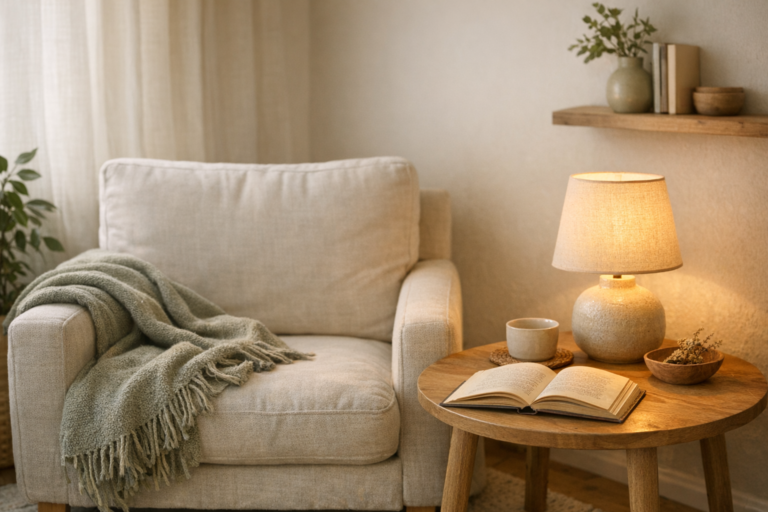
Rooms influence tempo. A crowded surface speeds the eye. Harsh lighting heightens strain. Too many unfinished clusters whisper that work is still waiting. By contrast, one cleared table, one lamp with warm light, one folded textile, or one intentionally empty corner can lower the volume of the whole room. The nervous system reads pattern before it reads intention.
Softness also improves consistency. When a home feels slightly easier to move through, people are more likely to cook, read, sit down, tidy gently, invite others in, and notice what needs care before overwhelm accumulates. A peaceful room is not a reward after perfect organization. It is a practical condition that makes maintenance and creativity more possible.
A quiet home is not a lifeless home. It is a room arranged so that everyday life can happen without scraping against itself.
Five Practices for Creating a Softer Home
Clear one surface completely
Choose one horizontal surface and let it become a place of visual rest. A side table, console, desk corner, or kitchen shelf can act like a pause mark for the whole home. When the eye finds one calm place, the room immediately feels more intentional.
In the DewFrame view, home softness depends less on decoration and more on the emotional logic of where things rest. That is why clear one surface completely works best when it is repeated with a calm, observable rhythm instead of being pushed into a strict performance routine. Small repetition makes the practice livable; livability is what turns a nice idea into a lasting editorial life habit.
Work with light in layers
A single bright overhead light rarely creates emotional depth. Add a lamp, let daylight remain visible, and use shadows as part of the atmosphere instead of something to erase. Layered light helps a room change mood with the hour, which is how real homes feel alive.
In the DewFrame view, home softness depends less on decoration and more on the emotional logic of where things rest. That is why work with light in layers works best when it is repeated with a calm, observable rhythm instead of being pushed into a strict performance routine. Small repetition makes the practice livable; livability is what turns a nice idea into a lasting editorial life habit.
Create a closing ritual for each zone
The kitchen might end with wiping the sink and folding the towel. The living room might end with stacking books and straightening cushions. The work corner might end with closing the notebook and clearing the cup. Small endings keep rooms from carrying yesterday into tomorrow.
In the DewFrame view, home softness depends less on decoration and more on the emotional logic of where things rest. That is why create a closing ritual for each zone works best when it is repeated with a calm, observable rhythm instead of being pushed into a strict performance routine. Small repetition makes the practice livable; livability is what turns a nice idea into a lasting editorial life habit.
Use texture before decoration
A linen throw, a ceramic cup, a woven tray, a cotton curtain, or unfinished wood often does more for a room than a decorative object chosen without emotional purpose. Texture adds softness that can be felt even before it is named.
In the DewFrame view, home softness depends less on decoration and more on the emotional logic of where things rest. That is why use texture before decoration works best when it is repeated with a calm, observable rhythm instead of being pushed into a strict performance routine. Small repetition makes the practice livable; livability is what turns a nice idea into a lasting editorial life habit.
Give useful things a beautiful resting place
Quiet homes do not hide life; they house it well. Baskets for chargers, a tray for keys, a bowl for fruit, a hook for the tote bag, a box for paper clutter. Utility becomes more peaceful when every recurring item knows where it belongs.
In the DewFrame view, home softness depends less on decoration and more on the emotional logic of where things rest. That is why give useful things a beautiful resting place works best when it is repeated with a calm, observable rhythm instead of being pushed into a strict performance routine. Small repetition makes the practice livable; livability is what turns a nice idea into a lasting editorial life habit.
A Daily Reset You Can Do in 20 Minutes
If you want home to feel less heavy, practice a simple evening reset at roughly the same time. Repetition teaches the space to return to itself.
- Open one window, even briefly, to release stale air and signal a transition into evening calm.
- Turn off one harsh light and replace it with a lamp or warmer light source.
- Clear one visible surface instead of trying to tidy the whole home at once.
- Put soft objects back where they live: blanket, book, mug, tray, notebook, candle.
- Finish the room with one sensory cue such as tea, music, incense, or silence.
- Leave one corner visibly ready for tomorrow morning so the home greets you kindly when you wake.
The point of a reset is not immaculate order. The point is emotional re-entry. You are teaching the room how to become quiet again.
Common Mistakes When Trying to Create a Calm Interior
Home softening often becomes frustrating because people overfocus on shopping and underfocus on rhythm.
- Buying before observing: New objects cannot solve a room whose main problem is unclosed routines or poor flow.
- Styling every inch: When every corner asks to be looked at, the room stops feeling restful and starts feeling staged.
- Treating tidying as punishment: A short repeated reset works better than infrequent cleaning driven by shame or panic.
Gentle spaces come from permission, not pressure. The room should support your life, not demand that you perform a cleaner version of yourself to deserve it.
Frequently Asked Questions
Can I make a rental feel softer without major changes?
Absolutely. Focus on movable softness: lamps, textiles, baskets, trays, curtains, scent, and the placement of daily objects. Rhythm and atmosphere transform a space more quickly than renovation does.
What if I live with other people who create clutter?
Start by claiming one calm zone that you can fully maintain. A single chair, desk corner, bedside surface, or shelf can become your stabilizing area. Influence spreads more effectively through example than through constant correction.
How do I keep a home calm with a busy schedule?
Choose rituals that take less than five minutes and attach them to transitions you already have: after dinner, after work, before bed, after showering, before opening a laptop. Calm survives when it is built into life, not added on top of life.
Closing Thought
A soft home is not silent because nothing happens there. It is soft because life happens there and still finds a place to land. That distinction matters. We are not trying to erase evidence of living; we are trying to make living feel kinder.
Once a room begins to hold light, rest, and small endings more gracefully, it changes the people inside it too. They move more gently, decide with less urgency, and remember that beauty can be built from repetition, not only from acquisition.
I loved the quiet, thoughtful tone of “How to Make a Home Feel Soft Again: Small Rituals for Quiet Living”. The pacing felt gentle and observant, and it made the subject feel very close and real.
This post stayed with me after reading. “How to Make a Home Feel Soft Again: Small Rituals for Quiet Living” feels beautifully observed, and the details give it such a calm editorial mood.